Environment
Temperature, humidity, direct sun, radiant heat, limited shade and indoor spaces without adequate cooling.
 Book an inquiry ↗
FREE PARENT RESOURCE
A practical parent partnership guide for helping youth athletes prepare before practice, recognize risk early and recover for the next day.
PREPARE · RECOGNIZE · RESPOND · PARTNER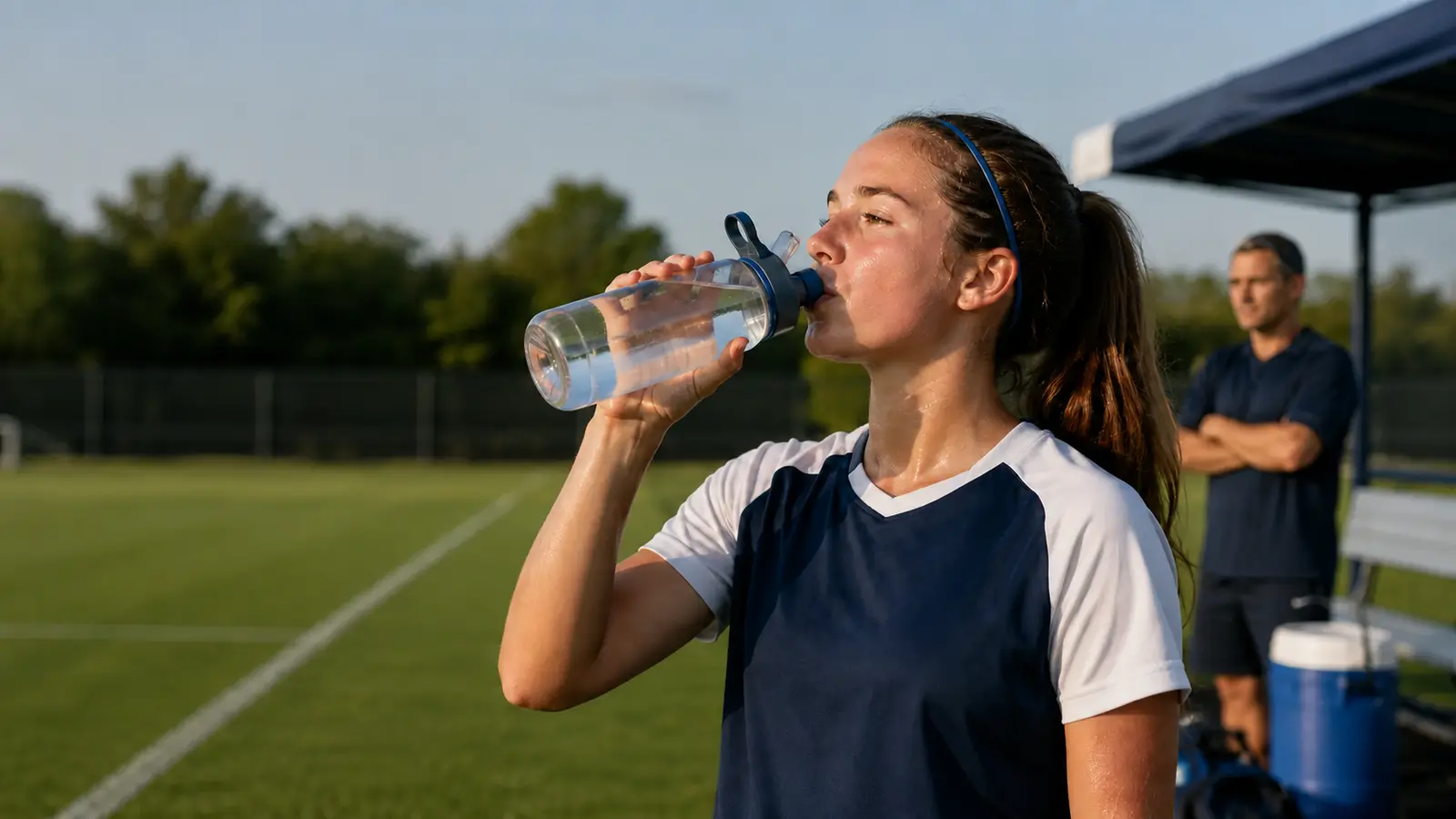
15+ years across youth development, professional sport, tactical performance, applied technology, education and human performance.
About Pat →THE PARENT PARTNERSHIP
Heat strain can build before an athlete reaches the field. School schedules, limited water access, late-summer weather, equipment, workload, illness, sleep and recovery all shape the athlete who arrives at practice.
This resource gives parents a calm, practical way to support good habits and communicate early. The goal is not to diagnose from the sideline or monitor every sip. It is to make preparation, recognition and partnership more consistent.
RISK LENS
Several moderate stressors can stack together. Look at the environment, training demand, athlete status and equipment as one system.
Temperature, humidity, direct sun, radiant heat, limited shade and indoor spaces without adequate cooling.
Conditioning-heavy practices, long work periods, repeated high-intensity drills, tryouts and multiple sessions close together.
School-day hydration, recent illness, sleep, recovery, previous heat illness, medication and individual medical considerations.
Helmets, pads, heavy uniforms, dark colors and gear that reduces airflow or limits sweat evaporation.
DAILY RHYTHM
A consistent routine is more useful than trying to solve a daylong problem in the final minutes before practice.
Drink with breakfast. Pack a bottle. Start with a routine instead of relying on thirst later.
Use refill opportunities. Small, steady intake is more useful than trying to catch up before practice.
Arrive prepared. Check thirst, urine color, energy, headache, illness and the effects of poor sleep.
Use breaks. Drink regularly. Cooling and rest support performance; they are not signs of poor toughness.
Replace fluids, eat and recover—especially when another practice, game or school day follows.
RECOGNITION
Context matters. A normally coordinated, talkative athlete who becomes confused, clumsy, unusually quiet or unable to recover after stopping deserves immediate attention.
Headache, dizziness, nausea, unusual fatigue, cramping, lightheadedness or feeling chilled despite the heat.
Poor coordination, staggering, vomiting, confusion, unusual behavior or symptoms that do not improve with rest.
Collapse, loss of consciousness, altered mental status, seizure-like activity, severe weakness or rapidly worsening symptoms.
FREE DOWNLOADS
Use the one-page overview for a fast conversation, then keep the full guide available for detailed planning with athletes, coaches, schools and teams.
Daily hydration routines, heat-risk factors, warning signs, age-stage guidance, sex and maturation considerations, sport and equipment demands, parent tools, coach collaboration and evidence references.
Download the full guide ↓PDF · 1 PAGEA visual, shareable summary of the core message: understand the risk, help before practice and partner with coaches.
Download the overview ↓Prepare early. Notice change. Keep communication open.
This resource is educational and does not replace medical care, athletic training support, school emergency action plans or individualized guidance. If an athlete shows emergency signs or rapidly worsening symptoms, stop activity and activate the local emergency response plan.